
Compară ofertele (1)
Prețurile sunt preluate automat din feed-urile magazinelor și pot diferi față de site-ul magazinului. Verifică prețul final la magazin.
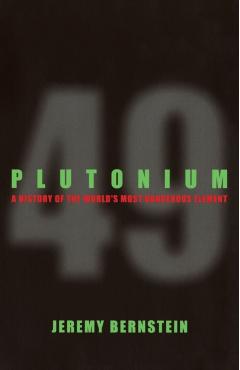
Descriere Plutonium - Jeremy Bernstein
In his new history of this complex and dangerous element, noted physicist Bernstein describes the steps that were taken to transform plutonium from a laboratory novelty into the nuclear weapon that destroyed Nagasaki. \nWhen plutonium was first manufactured at Berkeley in the spring of 1941, there was so little of it that it was not visible to the naked eye. It took a year to accumulate enough so that one could actually see it. Now so much has been produced that we don't know what to do to get rid of it. We have created a monster.The history of plutonium is as strange as the element itself. When scientists began looking for it, they did so simply in the spirit of inquiry, not certain whether there were still spots to fill on the periodic table. But the discovery of fission made it clear that this still-hypothetical element would be more than just a scientific curiosity-it could be the main ingredient of a powerful nuclear weapon.As it turned out, it is good for almost nothing else. Plutonium's nuclear potential put it at the heart of the World War II arms race-the Russians found out about it through espionage, the Germans through independent research, and everybody wanted some. Now it is warehoused around the world-the United States alone possesses about forty-seven metric tons-but it has almost no practical use outside its role in nuclear weaponry. How did the product of scientific curiosity become such a dangerous burden?In his history of this complex and dangerous element, noted physicist Jeremy Bernstein describes the steps that were taken to transform plutonium from a laboratory novelty into the nuclear weapon that destroyed Nagasaki. This is the first book to weave together the many strands of plutonium's story, explaining not only the science but also the people involved.-- Publishers Weekly \nWhen plutonium was first manufactured at Berkeley in the spring of 1941, there was so little of it that it was not visible to the naked eye. It took a year to accumulate enough so that one could actually see it. Now so much has been produced that we don't know what to do to get rid of it. We have created a monster.The history of plutonium is as strange as the element itself. When scientists began looking for it, they did so simply in the spirit of inquiry, not certain whether there were still spots to fill on the periodic table. But the discovery of fission made it clear that this still-hypothetical element would be more than just a scientific curiosity-it
Detalii
- Brand
- Cornell University Press
- Categorie
- ENSTK
- EAN / GTIN
- 9780801475177
- Magazine
- 1
- Disponibilitate
- in stock
Produse similare

Cornell University Press
Why Intelligence Fails - Robert Jervis
137,62 RON
libris.ro

Cornell University Press
The Ideological Origins of Great Power Politics, 1789-1989 - Mark L. Haas
139,22 RON
libris.ro

Cornell University Press
The Myth of Ethnic War: Serbia and Croatia in the 1990s - V. P. Gagnon
139,22 RON
libris.ro

Cornell University Press
The New Empire - Walter F. Lafeber
139,22 RON
libris.ro

Cornell University Press
In the Words of E. B. White: Quotations from America's Most Companionable of Writers - E. B. White
139,22 RON
libris.ro

Cornell University Press
State-Building: Governance and World Order in the 21st Century - Francis Fukuyama
139,22 RON
libris.ro

Cornell University Press
Maine Sublime: Frederic Edwin Church's Landscapes of Mount Desert and Mount Katahdin - John Wilmerding
139,22 RON
libris.ro

Cornell University Press
Religious Poverty and the Profit Economy in Medieval Europe - Lester K. Little
139,22 RON
libris.ro