

Helion & Company · ENSTK
The Shogun's Soldiers: Volume 2 - The Daily Life of Samurai and Soldiers in EDO Period Japan, 1603-1721 - Micheal Fredholm Von Essen
EAN: 9781804512500
Compară ofertele (1)
Prețurile sunt preluate automat din feed-urile magazinelor și pot diferi față de site-ul magazinului. Verifică prețul final la magazin.
Descriere The Shogun's Soldiers: Volume 2 - The Daily Life of Samurai and Soldiers in EDO Period Japan, 1603-1721 - Micheal Fredholm Von Essen
Details the organization, arms, armor, dress, and daily life of samurai, soldiers, and commoners in Edo-period Japan. \n \nTokugawa Ieyasu's decisive victory at Sekigahara in 1600 concluded the civil wars, confirmed his position of military supremacy as shôgun (generalissimo) of Japan, and inaugurated the Edo period (1600-1868), so named because Ieyasu after the battle established his capital in Edo (modern-day Tokyo). By then, Japan was an advanced, outward-looking country. Previously preoccupied by internal warfare, Tokugawa-ruled Japan was unified, strong, and technologically developed to a degree inferior to Europe only in certain sciences, such as shipbuilding and artillery. Japan was technologically superior in some disciplines, including the production of firearms, an import the Japanese had mastered very quickly. Japanese traders, mercenaries, and adventurers were a common sight in South-East Asia. There were flourishing Japanese overseas colonies, especially in the Philippines, Siam (now Thailand), and Java. One Japanese merchant-adventurer even managed to set himself up as a minor kingin southern Siam. Japan was a strong military power as well. The armies of Japan were a match for any enemy, well armed and with considerable combat experience. However, the government of Japan in 1635 retreated into enforced seclusion, a seclusion aided by the geographical situation of the Japanese islands. The seclusion laws were rigorously enforced. As the Age of Enlightenment, the Industrial Revolution and the subsequent global expansion of the European nations transformed the world, Japan chose isolation and stagnation. A major reason for this policy decision was military weakness. The Tokugawa army under Ieyasu had been numerically large, experienced, and well equipped, but since then, things had changed. Having defeated their enemies early in the century, the shogunate warriors settled down in castle towns. Many Tokugawa retainers settled permanently in Edo, where they soon lost the military edge they had once enjoyed. After 1615, the shôgun's soldiers were no longer needed for war. Technically there was no demobilization, however, with no more wars to fight, the shôgun's soldiers became townsmen in all but name. They retained samurai status but were no longer called up to fight. Yet, a Tokugawa army of sorts still existed. \n \nVolume Two continues the examination of the Edo period and the evolution of the Samurai class into a verity of new roles. No lo
Detalii
- Brand
- Helion & Company
- Categorie
- ENSTK
- EAN / GTIN
- 9781804512500
- Magazine
- 1
- Disponibilitate
- in stock
Produse similare
Helion & Company
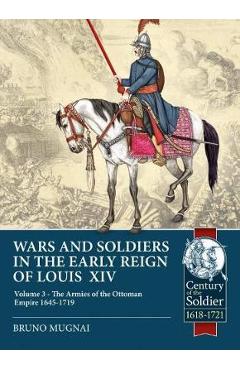
Wars and Soldiers in the Early Reign of Louis XIV, Volume 3: The Armies of the Ottoman Empire 1645-1719 - Bruno Mugnai
226,80 RON
libris.ro

Helion & Company
Four Flags: The Odyssey of a Professional Soldier. Part 2: Rhodesian Security Forces 1979-80, South African Defense Force 1981-83 - Dave Barr
226,80 RON
libris.ro

Helion & Company
The Danish Army of the Napoleonic Wars 1801-1814, Organisation, Uniforms & Equipment Volume 2: Cavalry and Artillery - David A. Wilson
226,80 RON
libris.ro
Helion & Company
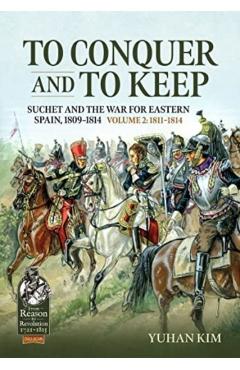
To Conquer and to Keep - Suchet and the War for Eastern Spain, 1809-1814: Volume 2 - 1811-1814 - Yuhan Kim
226,80 RON
libris.ro

Helion & Company
Italian Soft-Skinned Vehicles of the Second World War: Motorcycles, Cars, Trucks, Artillery Tractors 1935-1945 - Daniele Guglielmi
226,80 RON
libris.ro

Helion & Company
Solid as a Rock: Fallschirmjäger Regiment 1 on the Eastern Front and the Winter Battle for Orel (19 October 1942-31 March 1943) - Albrecht Zimburg
226,80 RON
libris.ro

Helion & Company
Armies and Wars of the French East India Companies 1664-1770: European, Asian and African Soldiers in India, Africa, the Far East and Louisiana - René Chartrand
226,80 RON
libris.ro

Helion & Company
Wars and Soldiers in the Early Reign of Louis XIV Volume 7 Part 2: German Armies, 1660-1687 - Bruno Mugnai
226,80 RON
libris.ro