

University Of The West Indies Press · ENSTK
Near a Plantation: Free Villages in Barbados, 1905-1945 - Woodville Marshall
EAN: 9789766409616
Compară ofertele (1)
Prețurile sunt preluate automat din feed-urile magazinelor și pot diferi față de site-ul magazinului. Verifică prețul final la magazin.
Descriere Near a Plantation: Free Villages in Barbados, 1905-1945 - Woodville Marshall
The book is an attempt to show that, \ncontrary to general belief, free villages were established in Barbados soon \nafter the end of the Apprenticeship in 1838. The term free villages is employed in the way that it was coined by \nits author, William Knibb, Baptist missionary in Jamaica. He said in November \n1838 that such villages were to be the blacks' routes of escape from their \ninveterate enemies; the emancipated black man could use the village as an asylum from which he \ncould defy them with scorn, and go to any estate he pleases to work. \nTherefore, the fact that as many as 69 such settlements could be found within \nthirty years in small, densely populated Barbados suggests that the scenario \nwhich was being played out in less densely populated territories was not absent \nfrom Barbados. Indeed, there is evidence to suggest that every opportunity was \nbeing exploited by blacks to acquire land that they could control and therefore \nescape the restrictions of conditional tenancy on planters' lands. \n\n \n \n \nHowever, free village development in \nBarbados can be seen as a variant. Unlike elsewhere in the Caribbean, free \nvillages could not be equated with the emergence of a small farmer class of \nsignificant size. In Barbados, the average size of holding was less than one \nacre, which meant that the vast majority of the villagers had to find regular \nemployment as agricultural labourers on the plantations. Therefore, by 1945, \nwhile free villages housed a majority of the rural population, that population \nwas forced to remain close to the plantation, not merely because of the size of \nthe island, but because the plantations were the main source of employment. In \nthis way, free village development in the island did not adversely affect \nlabour supplies on the plantations.\n
Detalii
- Brand
- University Of The West Indies Press
- Categorie
- ENSTK
- EAN / GTIN
- 9789766409616
- Magazine
- 1
- Disponibilitate
- in stock
Produse similare

University Of The West Indies Press
Slave Society in the Danish West Indies: St. Thomas, St. John and St. Croix - Neville A. T. Hall
209,25 RON
libris.ro

University Of The West Indies Press
Britain's Black Debt: Reparations for Caribbean Slavery and Native Genocide - Hilary Mcd Beckles
204,05 RON
libris.ro
University Of The West Indies Press
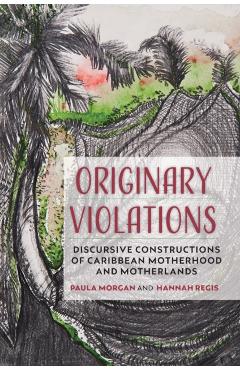
Originary Violations: Discursive Constructions of Caribbean Motherhood and Motherlands - Paula Morgan
204,05 RON
libris.ro
University Of The West Indies Press
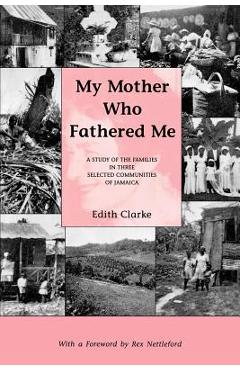
My Mother Who Fathered Me: A Study of the Families in Three Selected Communities of Jamaica - Edith Clarke
195,30 RON
libris.ro

University Of The West Indies Press
Nothing's Mat - Erna Brodber
192,51 RON
libris.ro
University Of The West Indies Press
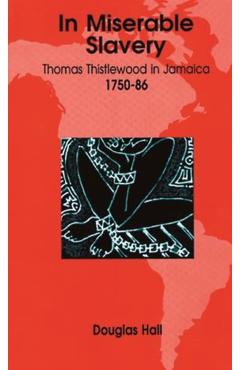
In Miserable Slavery: Thomas Thistlewood in Jamaica, 1750-86 - Douglas Hall
225,99 RON
libris.ro
University Of The West Indies Press
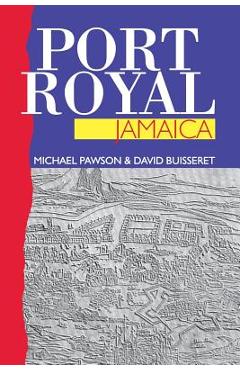
Port Royal, Jamaica - Michael Pawson
225,99 RON
libris.ro

University Of The West Indies Press
Vodou Cosmology and the Haitian Revolution in the Enlightenment Ideals of Kant and Hegel - Vivaldi Jean-marie
167,40 RON
libris.ro